
Surron Battery
Showing all 5 results


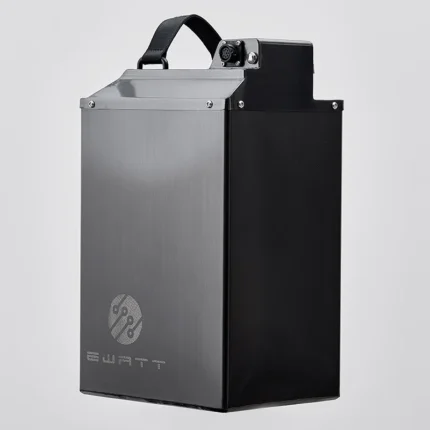

Factory Batteries Across the SurRon battery Lineup
Sur-Ron does not use a single universal battery across its bikes; voltage, capacity, and physical dimensions vary significantly by platform and model year:
| Model | Typical Stock Voltage & Capacity | Approx. Energy | Key Characteristics |
|---|---|---|---|
| Light Bee X (LBX) | 60V 32Ah–40Ah (newer models reach 72V 35Ah) | ~1.9–2.5 kWh | Compact downtube pack built for agility; earlier versions use 18650 cells while newer ones use 21700 cells. |
| Light Bee 2 | Semi-solid-state pack | ~3.53 kWh | Uses high-density semi-solid-state cells (around 14.9 kg) to boost range while keeping a low center of gravity. |
| Ultra Bee | 74V 55Ah–60Ah | ~4.1–4.4 kWh | Larger, trail-enduro pack paired with higher peak output (up to 24.5 kW on HP models). |
| Storm Bee | 90V–104V 48Ah–55Ah | ~4.6–5.7 kWh | Full-size motocross/enduro pack designed for sustained high-voltage delivery. |
Note: Always compare total watt-hours (V × Ah = Wh) rather than amp-hours alone, as higher voltage stores more energy at the same Ah rating.
2. The Aftermarket Upgrade Path: 60V vs. 72V+
Because the Light Bee X has a massive modification scene, aftermarket batteries are one of the most popular upgrades. Riders generally take one of two routes:
- High-Capacity 60V Packs (Range Focus): Replacing a stock 60V 32Ah pack with an aftermarket 60V 50Ah–60Ah pack increases trail range while remaining compatible with the stock controller and charger.
- 72V and 81V Packs (Power & Speed Focus): Jumping from 60V to 72V increases system voltage by 20%. Paired with an aftermarket controller and high-discharge cells (such as Samsung 50S or Molicel P42A 21700 cells), a 72V setup unlocks dramatically faster acceleration, higher top speeds, and far less voltage sag under heavy throttle.
Important Compatibility Rules of surron battery:
- A 72V battery will not work with a stock 60V controller or stock 60V charger—both must be upgraded to match the new voltage.
- High-power builds require upgraded discharge connectors (such as QS8 or QS10) and a Battery Management System (BMS) rated for higher continuous amperage so the pack does not cut out under load.
- Larger aftermarket packs often sit taller in the frame and require a seat-extender or taller battery lid.
3. Understanding the BMS and "Hidden" Reserve of SurRon battery
Inside every Sur-Ron battery sits a Battery Management System (BMS). It monitors cell temperatures, balances individual cell groups, and cuts power to prevent overcharging, overheating, or deep discharge.
When your dashboard reads 0%, the BMS typically keeps a built-in safety buffer (roughly 10–15% true charge) to prevent permanent cell damage. Never bypass the BMS to squeeze out extra amps—doing so removes critical thermal and short-circuit protections.
4. Four Habits That Double Battery Lifespan of SurRon battery
A stock Sur-Ron pack is typically rated for around 500 full charge cycles before dropping to 80% of its original capacity, though smart charging habits can stretch its useful life well beyond that